


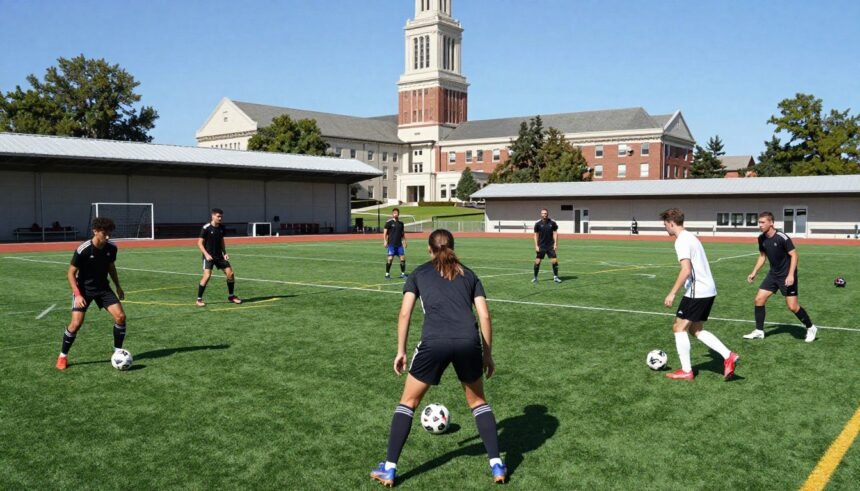
Finding a way to get a degree while playing soccer is a big dream. It’s not just about being good at the game.
- Understanding the Landscape of Soccer Scholarships
- Criteria for Identifying the Best Colleges for Soccer Scholarships 2026
- Navigating NCAA Division I Soccer Programs
- Exploring Opportunities in Division II and III
- Top Universities for Female Soccer Scholarships
- Top Universities for Male Soccer Scholarships
- Step One: Building Your Athletic Profile and Highlight Reel
- Step Two: Researching and Creating a Target School List
- Step Three: Mastering the Communication Process with Coaches
- Step Four: Understanding Soccer Scholarship Eligibility Requirements
- Step Five: Navigating the Official and Unofficial Visit Process
- Step Six: Evaluating Financial Aid Packages and Offers
- Step Seven: Managing the National Letter of Intent
- Common Pitfalls to Avoid During the Recruitment Journey
- Leveraging Club Soccer and ID Camps for Exposure
- Conclusion
- FAQ
You need a smart plan to get financial help for school and sports. Every athlete needs a good strategy for getting
noticed.
Many students aim for top universities with soccer scholarships. These places offer great training and education.
Getting on a team starts with knowing where to look.
We’ll show you how recruiters pick players and how to get started. Start your journey now to reach your dreams. Our guide makes finding the right athletic program easy.
Key Takeaways
- Focus on academic eligibility early in high school.
- Create a professional highlight reel to impress coaches.
- Research specific conference requirements and deadlines.
- Contact coaches directly to express genuine interest.
- Maintain a high grade point average to earn extra funding.
Understanding the Landscape of Soccer Scholarships
Getting a soccer scholarship is a big deal. It means understanding the different kinds of money help for college athletes. Knowing the types of scholarships is key to making smart choices.
The world of soccer scholarships is wide. It depends on the college, NCAA division, and the program.
Types of Athletic Financial Aid
Soccer players can get two main kinds of money help. These are scholarships and other kinds of aid. Scholarships can be full or partial.
Full-ride scholarships cover a lot. They pay for tuition, room, and board. But, not all colleges can give these out because of money or NCAA rules.
Partial scholarships help pay for some college costs. They can add up to a full scholarship if many are given to one athlete or shared among team members.
Full Scholarships vs. Partial Scholarships
Choosing between full and partial scholarships depends on many things. These include the athlete’s skill, the college’s budget, and NCAA rules. Full scholarships are for the best athletes. Partial scholarships are easier to get but
cover less.
It’s important to know what each scholarship means. Full scholarships cover more but are harder to get.
Partial scholarships help a lot but are easier to get.
Student-athletes should look at all their options. They need to understand what their scholarship means.
NCAA soccer scholarships have rules and limits. Knowing these can help athletes use their chances wisely.
Criteria for Identifying the Best Colleges for Soccer Scholarships 2026
Finding the best colleges for soccer scholarships is not just about sports. It’s about looking at many things. Students should check the school’s reputation, the coaches, the facilities, and the campus vibe. This ensures a great college life.
Academic Reputation and Campus Culture
A school’s reputation matters a lot for athletes. It affects their future jobs. Top soccer scholarship schools have good programs for learning. They also have a great campus vibe.
- Academic support services for athletes
- Diversity and inclusivity on campus
- Extracurricular activities and community engagement
When looking at best NCAA colleges for soccer scholarships, find a good mix. A school should be tough in learning and offer great sports chances. This helps athletes learn and play well.
Coaching Staff Stability and Philosophy
The coaching team’s stability and view are key for athletes. A steady team offers a clear plan for the future. When checking best soccer colleges in the US, see the coaches’ experience and how they help players grow.
- Coaching experience and credentials
- Player development programs
- Team performance history
Facilities and Training Resources
The quality of a school’s sports facilities matters a lot. Top soccer scholarship schools have the best places for athletes to train. Look at the fields, labs, and medical help when picking a school.
| Facility Type | Description | Importance |
| Training Fields | High-quality grass or turf fields for practice | High |
| Sports Science Labs | Facilities for performance analysis and injury prevention | Medium |
| Medical Support | Access to medical staff and rehabilitation facilities | High |
Navigating NCAA Division I Soccer Programs
Players dreaming of NCAA Division I scholarships need to know the college soccer recruiting process well. The path to Division I is tough and needs a detailed plan.
The Competitive Nature of Division I
NCAA Division I soccer is the top level in college sports. It draws the best players from everywhere. The competition is fierce, with teams always looking for top athletes.
The recruiting for Division I soccer is very competitive. Coaches and scouts want players with great skills, speed, and endurance. Also, doing well in school is important for getting recruited.
Scholarship Limits and Roster Management
Knowing about scholarship limits and roster management in NCAA Division I soccer is key. The NCAA sets limits on scholarships, and coaches must manage their teams carefully to follow the rules.
Understanding Headcount vs. Equivalency Sports
In NCAA Division I, soccer is a headcount sport for men and an equivalency sport for women. This affects how scholarships are given out and managed.
- For men’s soccer, each scholarship is a full-ride scholarship.
- For women’s soccer, coaches can give partial scholarships to more athletes.
Knowing these differences is important for athletes and their families. It helps them understand the recruiting process and deal with scholarship offers.
To increase their chances of getting a scholarship, athletes should understand these details. They should plan their recruitment strategies carefully.
Exploring Opportunities in Division II and III
Soccer players can find great scholarship chances in Division II and III colleges. These schools offer a good mix of sports and studying. They are not just for the best athletes, but for those who want to grow in both areas.
The Role of Academic Scholarships in Division II
Division II schools focus on both sports and learning. They give out scholarships for both sports and studying. This makes them great for students who do well in school and on the field.
Academic scholarships in Division II can help pay for school. This lets students focus on their studies and sports. For example, Grand Valley State University and West Texas A&M University have strong soccer teams and help their students a lot.
| University | Division | Average Academic Scholarship |
| Grand Valley State University | DII | $10,000 |
| West Texas A&M University | DII | $8,500 |
| University of Charleston | DII | $12,000 |
Why Division III Schools Offer Unique Value
Division III schools don’t give out athletic scholarships. But, they offer a lot of financial help through academic scholarships and grants. They focus on the student-athlete experience, valuing learning and personal growth.
The Importance of Financial Aid Packages
It’s key to understand financial aid packages for Division III schools. These packages include grants, loans, and work-study programs. They help make college more affordable for families.
When looking at financial aid, think about the total cost of college. Schools like Amherst College and Williams College have big financial aid programs. This makes them more open to different students.
Top Universities for Female Soccer Scholarships
Women’s soccer is getting more popular. Now, universities offer more scholarships than before. This gives female soccer players many choices.
These schools offer both sports and learning chances. These chances can really help a student-athlete’s career.
Powerhouse Programs in the ACC and SEC
The ACC and SEC are known for their soccer. Schools in these conferences have strong soccer histories. They also give out a lot of scholarships.
The University of North Carolina at Chapel Hill is in the ACC. It has a great women’s soccer team. They have trained many Olympians and professional players.
Top Programs in the ACC and SEC:
- University of North Carolina at Chapel Hill
- University of Florida
- Clemson University
- University of Virginia
Mid-Major Schools with Strong Development Records
Don’t ignore mid-major schools. They also offer scholarships and a personal development environment.
For example, the University of Tulsa and the University of South Florida focus on female soccer players. They help them grow both in sports and studies. These teams are smaller, so players get more attention from coaches.
Notable Mid-Major Programs:
- University of Tulsa
- University of South Florida
- Drexel University
- University of Hartford
Looking at both big and small schools helps female soccer players find the right place. It’s about finding the best fit for their goals.
Top Universities for Male Soccer Scholarships
Higher education costs are rising. Male soccer players are looking at NCAA soccer scholarships to help pay for school. The United States has many colleges that are great for both learning and soccer.
These colleges let athletes improve their skills and compete at high levels. They also offer scholarships to help pay for school. College soccer includes both well-known schools and new ones.
Traditional Men’s Soccer Dynasties
Some colleges have a long history of being great at men’s soccer. They produce top athletes and do well in NCAA games. These schools have strong soccer programs and experienced coaches.
Notable Traditional Programs:
- University of Maryland
- Indiana University
- Stanford University
These programs have a good track record of sending athletes to the pros. They offer a great soccer culture and tough competition. This makes them great choices for soccer players.
Emerging Programs with High Scholarship Budgets
New programs are also investing in men’s soccer. They are improving their facilities and hiring better coaches. They also offer big scholarships to attract top players.
Emerging Programs to Watch:
- Kansas City University
- University of Tulsa
- Creighton University
These programs are growing and offer a new chance for athletes. They provide a competitive environment and scholarship chances.
When looking at these colleges, check their soccer programs. Look at their coaching, team spirit, and competition level.
| University | Conference | Scholarship Opportunities |
| University of Maryland | Big Ten | Full Rides Available |
| Kansas City University | Summit League | Partial Scholarships |
| Stanford University | Pac-12 | Full Rides Available |
Step One: Building Your Athletic Profile and Highlight Reel
To stand out in college soccer recruiting, you need a strong profile and reel.
Your profile is a detailed look at your soccer career. It shows your achievements, skills, and what makes you a great team player.
Essential Elements of a Soccer Resume
A soccer resume is key to your profile. It should have:
- Contact Information: Make sure coaches can reach you easily.
- Achievements and Awards: List any big wins or awards you’ve gotten.
- Statistics and Skills: Use numbers to show your success, like goals scored.
- Academic Information: Share your GPA and any academic wins to show you can handle school and sports.
| Section | Details to Include | Importance Level |
| Contact Information | Name, Email, Phone Number, Club/High School | High |
| Achievements and Awards | Tournaments Won, MVP Awards, All-Star Selections | High |
| Statistics and Skills | Goals Scored, Assists, Saves (for goalkeepers) | Medium |
| Academic Information | GPA, Standardized Test Scores, Academic Awards | Medium |
Tips for Filming High-Impact Highlight Footage
Making a good highlight reel is key to showing your skills to coaches.
Here are tips for making great footage:
- Use Good Camera Quality: Get a good camera or use a high-quality smartphone.
- Capture Game Situations: Focus on your play in real game situations.
- Edit Professionally: Use video editing software to make your reel short and interesting.
By following these steps and tips, you can make a strong profile and reel. This will help you get noticed by college coaches and increase your chances of getting a soccer scholarship.
Step Two: Researching and Creating a Target School List
Getting a soccer scholarship needs careful research. You must find colleges that match your athletic and academic needs. This step is key to finding places where you can do well in sports and studies.
When making your list, balance sports skills with academic fit. Athletic talent is important. But, also think if the college’s major or program fits your interests and career goals.
Balancing Athletic Ability with Academic Fit
First, look at your grades and sports achievements. Think about your GPA, test scores, and soccer competition level. This helps you find colleges where you might get a scholarship.
Academic fit means more than just getting in. It’s about doing well in a program that helps you in your future career. Look at the college’s programs, faculty, internship chances, and alumni success.
Using Online Databases to Filter Schools
Online tools and college search sites are great for finding schools. Sites like NCSA Sports, College Board, and the NCAA Eligibility Center have lots of info on soccer scholarships.
These sites let you filter schools by athletic division, location, majors, and student GPA. This makes it easier to find colleges that match your sports and study skills.
By doing thorough research and making a list of target schools, you can strategically position yourself for a soccer scholarship. This way, you increase your chances of getting financial help and find a college where you can succeed in sports and studies.
Step Three: Mastering the Communication Process with Coaches
To get a soccer scholarship, you need to talk to college coaches well. Good communication can really help you get soccer scholarship opportunities.
Drafting Professional Emails to College Coaches
First impressions are key when emailing college coaches. A professional email is a must. Here’s how to do it:
- Use a clear and concise subject line that includes your name and the sport you play.
- Introduce yourself and state the purpose of your email.
- Highlight your athletic achievements and academic credentials.
- Include a link to your highlight reel or attach it to the email if possible.
Here’s an example of an email structure:
- Introduction: Briefly introduce yourself and mention how you came across the college program.
- Body: Discuss your athletic and academic achievements, and express your interest in the program.
- Call to Action: Request feedback or express your desire to discuss the program further.
- Closing: Thank the coach for their time and consideration.
Timing Your Outreach Based on NCAA Rules
Knowing NCAA rules for talking to college coaches is key. Coaches can start contacting recruits at certain times. For example:
- Division I coaches can start contacting recruits via phone or email on September 1st of their junior year.
- Division II coaches have different rules; they can contact recruits earlier, but it’s important to check the specific NCAA guidelines.
Getting your timing right can really help you get an athletic scholarship for soccer players. Don’t wait too long to reach out.
By getting good at talking to college coaches, you can get noticed more. This can help you get a soccer scholarship.
Step Four: Understanding Soccer Scholarship Eligibility Requirements
To get a soccer scholarship, you must know the NCAA’s rules. The NCAA has clear rules for who can get scholarships. Knowing these rules is key to getting noticed by colleges.
NCAA Eligibility Center Registration
First, you need to sign up with the NCAA Eligibility Center. This is a must for those aiming for NCAA Division I or II. You’ll need to make an account, pay a fee, and send in your school records and test scores.
The NCAA checks your info to see if you’re eligible. It’s important to start early because it takes time.
Maintaining Academic Standards and Core Coursework
Keeping up good grades is also important. The NCAA wants you to have done certain schoolwork and have good grades. You need to do well on tests like the SAT or ACT too.
For Division I, you need 16 core courses. This includes four years of English, three of math, and two of science. Division II has similar rules but with some differences. Meeting these standards is key to being eligible.
Getting a soccer scholarship is about more than just playing well. You need to do well in school and follow NCAA rules. By signing up with the NCAA Eligibility Center and keeping up your grades, you can increase your chances of getting a scholarship.
Step Five: Navigating the Official and Unofficial Visit Process
It’s important to know the difference between official and unofficial visits. This knowledge helps student-athletes find soccer scholarships at top schools.
Questions to Ask During Campus Visits
When you visit campuses, have a list of questions ready. Ask about the soccer program’s culture and the coaching staff’s expectations. Asking the right questions helps you see if a program is right for you.
- What are the typical daily routines for soccer players during the season and off-season?
- How does the coaching staff support players in terms of academic performance?
- What are the team’s goals for the upcoming season, and how does the coaching staff plan to achieve them?
What to Look for in a Team Environment
Watching how the team interacts during your visit is key. Notice how players and coaches get along. A good team culture is important for your success and happiness.
- A supportive and cohesive team environment.
- The condition and availability of training facilities.
- The overall attitude and morale of the players.
By carefully evaluating during your visits, you can choose the best college soccer program for you.
Step Six: Evaluating Financial Aid Packages and Offers
Looking at financial aid offers is key for soccer players seeking college scholarships. It’s not just about the money. You need to look at the total cost, the scholarship terms, and if it can be renewed.
Comparing Total Cost of Attendance
When looking at financial aid, remember the total cost of attendance. This includes tuition, room, board, books, and more.
- Tuition and Fees: The cost of classes and fees.
- Room and Board: Housing and meal plans.
- Books and Supplies: Textbooks, equipment, and materials.
- Miscellaneous Expenses: Transportation and personal costs.
Knowing these parts helps you see the real cost of a college. A college might have low tuition but high other costs. This makes it more expensive overall.
Negotiating Offers and Understanding Renewal Terms
After getting financial aid offers, it’s important to understand each one. You should also know how to negotiate. Some scholarships can be renewed, while others are one-time.
Key factors to consider when negotiating offers include:
- Scholarship Renewal Terms: Know the conditions for renewal. Some require a certain GPA or programs.
- Duration of the Scholarship: Find out how long the scholarship lasts. Some last one year, others four years.
- Additional Funding Opportunities: Ask about other aid or scholarships you might get.
Negotiating financial aid is delicate. Be professional and respectful when talking to college officers. Showing you really want the college might get you a better deal.
Step Seven: Managing the National Letter of Intent
The National Letter of Intent is a big deal for college soccer players. It’s a promise between the athlete and the college. The athlete agrees to go to the college for a set time in exchange for a scholarship.
It’s important to know what this document means. It affects your soccer and school plans. The college’s sports team also plays a big role in this step for NCAA soccer scholarships.
The Legal Implications of Signing
Signing the National Letter of Intent is a big deal legally. It means you promise to go to the college for at least a year.
Remember, it’s not just about playing soccer. It’s a big contract that affects your school and sports career. Make sure you’re okay with the terms before signing. If you back out, you might lose a year of eligibility and could face legal trouble.
Deadlines and Commitment Protocols
The National Letter of Intent has specific rules and deadlines. The signing period is in November for early signers and in the spring for others.
Know these deadlines well. Make sure you’re ready to decide on time. You need to know your college recruiting for soccer options and talk to the college coaches.
Also, follow the commitment rules. This means telling other colleges you’ve chosen one and finishing all paperwork correctly and on time.
By handling the National Letter of Intent well, you can join a college soccer team. This is a big step towards your school and sports dreams.
Common Pitfalls to Avoid During the Recruitment Journey
When you’re trying to get a soccer scholarship, watch out for common mistakes. The journey is not just about sports. You also need to do well in school and talk well with coaches.
Knowing what mistakes to avoid can really help you. Stay informed and keep working towards your goal. This way, you can avoid common problems and focus on getting that scholarship.
Overestimating Athletic Ability
Many students think they’re better than they really are. It’s important to know your true skills and how they stack up against others.
Key Considerations:
- Be honest about your athletic abilities and what you can do.
- Know the level of competition you’re facing.
- Work on improving your skills instead of just relying on talent.
Ignoring Academic Requirements
Don’t overlook the need to meet academic standards for scholarships. Your grades and schoolwork are just as important as your sports skills.
Academic Eligibility Tips:
- Keep a good GPA.
- Take hard classes like AP or IB.
- Get ready for tests like the SAT or ACT.
| Academic Requirement | Importance Level | Action Required |
| GPA | High | Maintain a GPA of 3.0 or higher |
| Standardized Test Scores | High | Prepare for and score well on the SAT or ACT |
| Core Coursework | High | Complete required core courses as specified by the NCAA |
Lack of Proactive Communication
Not talking enough to college coaches is a big mistake. Keeping in touch shows you’re interested in their teams.
Effective Communication Strategies:
- Send emails to coaches that show off your achievements and interest in their teams.
- Answer coaches’ questions quickly and fully.
- Share updates about your sports and school life.
By avoiding these mistakes and staying focused, you can increase your chances of getting a soccer scholarship. The journey is about being proactive and informed, not just your sports skills.
Leveraging Club Soccer and ID Camps for Exposure
Getting noticed in college soccer recruiting is easier with showcase tournaments and ID camps. These events are key for soccer players to show their skills. They get to play against the best and meet college scouts and coaches.
Selecting the Right Showcase Tournaments
Not all tournaments are good for getting college recruiters’ attention. Top universities for soccer scholarships look at certain events. It’s important to find these tournaments.
- Find tournaments known for college scouts and coaches.
- Make sure the competition level fits your skills.
- Tournaments with big soccer organizations get more attention.
Maximizing Your Performance at College ID Camps
College ID camps let you train with college coaches and players. It’s a chance to see what college soccer is like. To do well, show your technical skills, tactical awareness, and physical abilities.
Being ready is key. Stay in shape and know the game well. Also, be open to learning from coaches and improving based on their feedback.
Conclusion
Getting a soccer scholarship needs a smart plan. Knowing the top schools for soccer scholarships in 2026 is key. Student-athletes can find the right fit by looking at NCAA divisions.
A good athletic profile and talking to college coaches can help a lot. It’s important to pick schools that match both your sports skills and studies.
As you move through the recruitment process, stay active and informed. Club soccer and ID camps can help you get noticed by top teams.
Choosing the right college for a soccer scholarship in 2026 takes hard work and knowing the process well. By following the advice in this article, you can find a great soccer scholarship school.
FAQ
What are the best colleges for soccer scholarships 2026?
To find the best colleges for soccer scholarships in 2026, look for schools that excel in sports and offer good financial help. Top schools like Stanford University, the University of North Carolina (UNC), and Indiana University are great. They offer strong soccer scholarships for athletes who also do well in school.
How do NCAA soccer scholarships differ between Division I and Division II?
NCAA soccer scholarships are the same for Division I and II. Coaches at top schools like UCLA or Wake Forest have a set amount of money to give out. This money can be split among the team. Division II schools might give more money for school, not just sports.
Which institutions are considered the best colleges for female soccer scholarships?
The best colleges for female soccer scholarships are often in the ACC and SEC. Schools like Florida State University, the University of Virginia, and Penn State are top choices. They have great facilities and offer big scholarships for soccer players.
What are the top universities for male soccer scholarships currently?
Top universities for male soccer scholarships include Clemson University, the University of Maryland, and Georgetown University. These schools are known for their big scholarship budgets and helping players get to Major League Soccer (MLS).
What are the primary soccer scholarship eligibility requirements for recruits?
To qualify for soccer scholarships, you need to meet NCAA rules. You must finish 16 core courses in high school, keep a good GPA, and prove you’re an amateur athlete. Understanding these rules is key to getting into college soccer.
How can I find more soccer scholarship opportunities at the Division III level?
Division III schools don’t give athletic scholarships but offer financial aid. Schools like Amherst College or Johns Hopkins University can help a lot. Their aid can cover more of your college costs than a partial athletic scholarship at a D1 or D2 school.
What is the most effective way to handle college recruiting for soccer?
To succeed in college soccer recruiting, be proactive. Make a great highlight reel and a professional soccer resume. Then, find schools that match your skills and contact their coaches. Going to college ID camps is also key to getting noticed by coaches.
Why is the National Letter of Intent important for top universities for soccer scholarships?
The National Letter of Intent (NLI) is a big deal. It’s a promise to attend a top soccer school in exchange for financial help. Once signed, other schools can’t recruit you, giving you and the school peace of mind.